AI vs. Human Intelligence. Why the Future of Work is Still Human
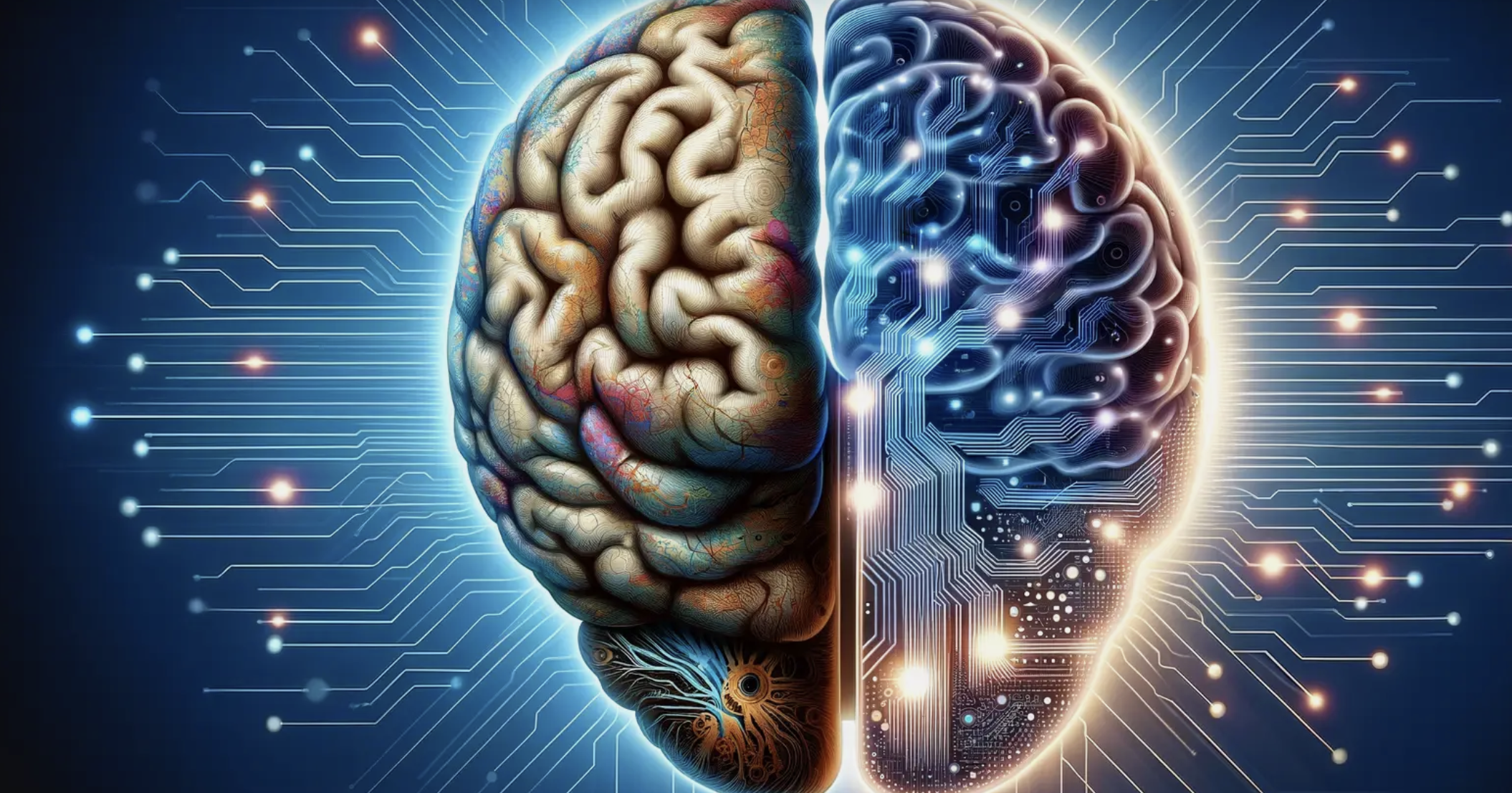
Why the Future of Work is Still Human
For most of my career, if you asked someone what I do, they’d tell you I’m a sustainability entrepreneur. I’ve spent more than two decades helping companies rethink how they build value—not just for shareholders, but for society and the planet.
Lately, though, I’ve been getting a question that usually comes with a slightly raised eyebrow, Why AI?!
It’s a fair question. On the surface, moving from sustainability to artificial intelligence looks like a sharp left turn. But to me, it isn’t a shift at all. Across my entire career, I’ve really only been asking one question, How do we build a better future?
20+, answering that meant pushing leaders to see that long-term prosperity requires looking beyond short-term profit. Today, the context looks different, but the core challenge is unchanged.
AI is reshaping every corner of work, and the headlines are full of talk about speed, automation, and efficiency. But I think we’re asking the wrong question. It’s no longer about if or when AI will transform work, it’s already happening. The real question is: What makes us indispensable when intelligence is no longer scarce?
When raw information and technical execution become instant commodities, the competitive bar shifts. AI can draft a market analysis or write code in seconds. What it can’t do is exercise human judgment, critical thinking, build trust, or hold an ethical line when things get messy.
We’re already seeing this play out across industries:
Tools like IBM Watson can digest thousands of clinical trials and medical studies in seconds to suggest options. But an AI can’t sit across from a frightened family, read the subtle emotional shifts in the room, and guide them through a difficult care decision with genuine bedside empathy. The tech handles the data processing, but the human doctor provides the care.
Recent research from McKinsey highlights that while AI can project outcomes and summarise data, it can't handle the core work of leadership. It can't set an inspiring vision, resolve conflicting values during a crisis, or read the room when a team is facing burnout and uncertainty.
Organisations are finding that automating routine tracking and basic queries with AI only works if it frees up human teams to handle complex, high-friction situations where empathy, context, and creative problem-solving actually matter.
These skills are becoming our primary strategic advantage.
This is what I call The Human Edge.
It’s the set of deeply human capabilities, curiosity, entrepreneurialship, courage, wisdom, and empathy, that enable us to thrive when technology moves faster than our natural ability to adapt. It’s the difference between adopting AI just to cut corners versus using it to elevate what people are capable of doing.
The companies that lead over the next decade will be the ones that invest most intentionally in human capability, building cultures where continuous learning, questioning, and personal growth are built into the DNA.
Leadership itself is entering a new era. The job is no longer just managing change; it’s creating the conditions for people to flourish inside it.
That is the exact reason I founded Edify Collective. We didn't build it just to help organisations roll out software. We created it to help leaders and teams perform with greater confidence, capability, and purpose in an AI-enabled world.
Ultimately, the future won't be defined by the technology we build. It will be defined by what that technology enables us to become.